
Loading workspacePreparing your latest view
A Kavanah Book — Free to Read
A 33-Chapter Lineage of Wisdom — Self-Mastery, Ancient, Industrial, Modern
From the granaries of Sumer to the spreadsheets of Silicon Valley, every generation rediscovered the same craft and gave it a new name. This book is a guided tour through 5,000 years of management — beginning where every great manager begins, with the discipline of the self — and tracing what we borrowed, what we forgot, and what still works.
33 of 33 chapters published · new chapters added weekly
An Introduction
The discipline this book is about, and the reason it carries the name it carries.
This book is published under the name Kavanah — a Hebrew word that has no clean English equivalent. It means intention, focus, directed consciousness; the inner alignment behind an action. In Jewish thought kavanah is what separates a recited prayer from a meant one, a performed ritual from an inhabited one. The Talmud calls prayer without kavanah a body without a soul. Whatever else they share, the great religious and philosophical traditions agree on one thing: the value of an act lives in the intention behind it.
That is also a working theory of management. Most of what falls apart in the daily life of an organization is not technical. It is the slow attritional cost of misalignment — between what a manager intended and what the team executed, between what the team thought they were building and what the customer actually needed, between the strategy on the slide and the calendar that consumes the week.
Frameworks are scaffolding for keeping intention intact across people and time. The frameworks differ wildly across the centuries. The underlying problem does not. Whether the manager is a Sumerian temple overseer rationing barley to a labor crew, a Roman centurion shaping a cohort, a Tang Dynasty magistrate routing grain through the canal system, or a modern engineering director shipping a quarterly roadmap — the inner discipline is the same. Hold an intention. Direct the right people and resources toward it. Notice quickly when reality drifts. Correct, sometimes painfully, before the drift compounds.
The Hebrew root k-v-n means to direct, to aim, to align, to orient toward something. That root is the through-line of the whole craft. The chapters that follow are, more than anything else, a tour of how each civilization has answered the same recurring question: how do you keep a group of people directed at the right thing for long enough to actually produce it?
It would be easy to assume that management matters less now that the machines can plan, schedule, summarize, write status reports, and even draft the strategy document. The opposite is true. Software that can do more on a person's behalf raises, not lowers, the premium on the human judgment that decides what to do, who to do it with, and what 'good' looks like.
When a junior manager can ship a six-paragraph weekly report at the press of a button, the bottleneck is no longer composition. It is whether the report is honest, whether it surfaces the real risk, whether the team trusts what is in it. None of that is a model problem. All of it is a kavanah problem. When an AI agent can generate fifty plausible product specifications in an afternoon, the scarce skill is not generation. It is taste — the ability to look at fifty options and say, with conviction, which one is worth a quarter of the team's attention. Taste is intention applied at speed.
The automation wave does not retire the manager. It moves the manager up the value stack. Every operation that used to occupy the middle of the day — drafting, summarizing, scheduling, reporting — collapses toward zero cost. What remains, and what therefore becomes the entire job, is the part that was always hardest and least teachable: deciding what should exist, picking who should build it, holding everyone honest about whether it is working, and accepting the consequence when it is not. Those four operations are the four primitives this book traces across five thousand years. They are not going away. They are about to matter more than they ever have.
There is a quiet asymmetry in the current moment that is worth naming directly. AI capability is scaling on an exponential. Organizational capacity to channel that capability is scaling on, at best, the slow human curve we have always been on. The gap between what a team can produce and what a team can sensibly direct is widening month by month.
That gap is the management problem of the next decade. A bad strategic call now ships ten times faster than it did in 2015. A misaligned roadmap now drags a hundred AI agents instead of a handful of analysts. A culture that tolerates drift will drift further and quicker than it ever did before, because every individual contributor is suddenly able to produce more drift per hour. The same leverage that lets a small team outpace a large one also lets a confused team outpace its own ability to course-correct.
Management is the layer that decides whether the speed-up runs toward the right outcome or away from it. That layer cannot be delegated downward into the tools — it is the layer that does the delegating. As capability compounds, the cost of weak management compounds with it. The premium on a manager who can hold a clear intention through a noisy quarter is not shrinking; it is becoming the rate-limiting input on the entire enterprise.
This is why we built the company that publishes this book, and it is why we wrote the book at all. The software will keep getting more capable. The discipline of pointing it at the right thing will keep being a human one. We would rather make that discipline a little easier to learn.
The chapters move chronologically because the lineage is the argument. Surface forms of management have changed wildly over five millennia — from clay tablets to OKR documents, from priestly castes to flat startups, from grain rations to equity grants. The inner discipline has not. Naming an outcome, allocating people and attention to it, getting honest feedback fast, and following through on consequence — these four operations recur in every era because they are what coordination is. The frameworks are choreography. The primitives are physics.
Read it slowly. There is no rush, and the lineage rewards patience. Each chapter is designed to stand alone, but the cumulative force is in the recurrences — the moment in the Industrial Revolution chapters where you recognize a problem first solved by a Sumerian overseer in 2700 BCE, the moment in the modern chapters where you realize Drucker is essentially restating Confucius, the moment near the end where you see how every era's answer is partial and how the next era's job is to inherit, not abandon.
To manage well is to hold intention steady through noise. The noise gets louder; the intention has to get clearer. That is the discipline this book is about, and the reason it carries the name it carries. Patience is itself a form of kavanah. Read accordingly.
Kavanah, the company, exists to make the practice of intentional management easier at team scale. Kavanah, the book, exists to remind the reader that the practice itself is older than any company, any framework, any technology — and that whatever comes next will still rest, as every era before it has, on the four primitives a Sumerian scribe was already tracking when he scratched the first ration tablet.

Chapter 1
What Management Actually Is
Stripping the word back to its load-bearing meaning
Read chapter
Chapter 2
Why Coordinating Other People Is Hard
The unavoidable physics of human work
Read chapter

Chapter 3
The Manager as Craft, Not Title
Why the best managers think of themselves as practitioners
Read chapter

Chapter 4
The Self as the First Subordinate
Why every manager learns to manage themselves first
Read chapter

Chapter 5
Sumer and the Birth of the Ledger
How double-entry started in a temple granary
Read chapter

Chapter 6
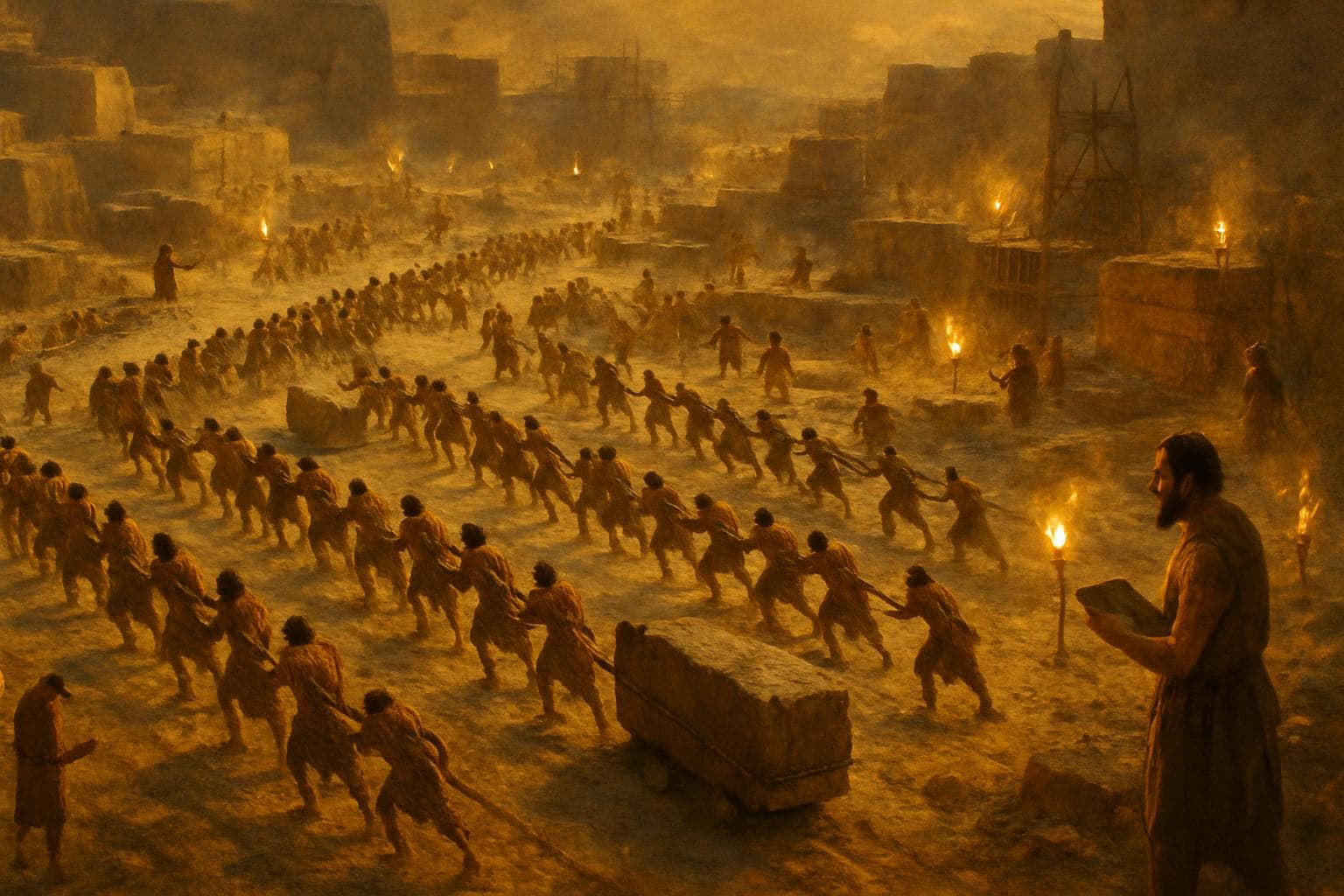
Egypt: The Pyramid as a Project Plan
Twenty-year deliveries, paid in beer and bread
Read chapter

Chapter 7
Sun Tzu: Strategy as Resource Management
Why The Art of War is mostly an operations manual
Read chapter

Chapter 8
Confucius and the Rectification of Names
Why what you call a job determines how it is done
Read chapter

Chapter 9
Kautilya's Arthashastra: The First MBA Curriculum
A 4th-century BCE manual on running an enterprise
Read chapter

Chapter 10
Rome: The First Organization at Continental Scale
Legions, provinces, and the invention of middle management
Read chapter

Chapter 11
Stoicism for Managers
Marcus Aurelius's Meditations as an executive journal
Read chapter

Chapter 12
The Benedictine Rule and the Invention of the Workday
How a 6th-century monastery codified time and labor
Read chapter

Chapter 13
The Venetian Arsenal: Mass Production Before Industry
How Venice built a galley a day in the 1500s
Read chapter

Chapter 14
The Medici and the Management of Networks
A bank, a family, and the invention of branch governance
Read chapter

Chapter 15
Machiavelli, Reread as a Manager's Manual
Beyond the bumper-sticker quotes
Read chapter
Chapter 16
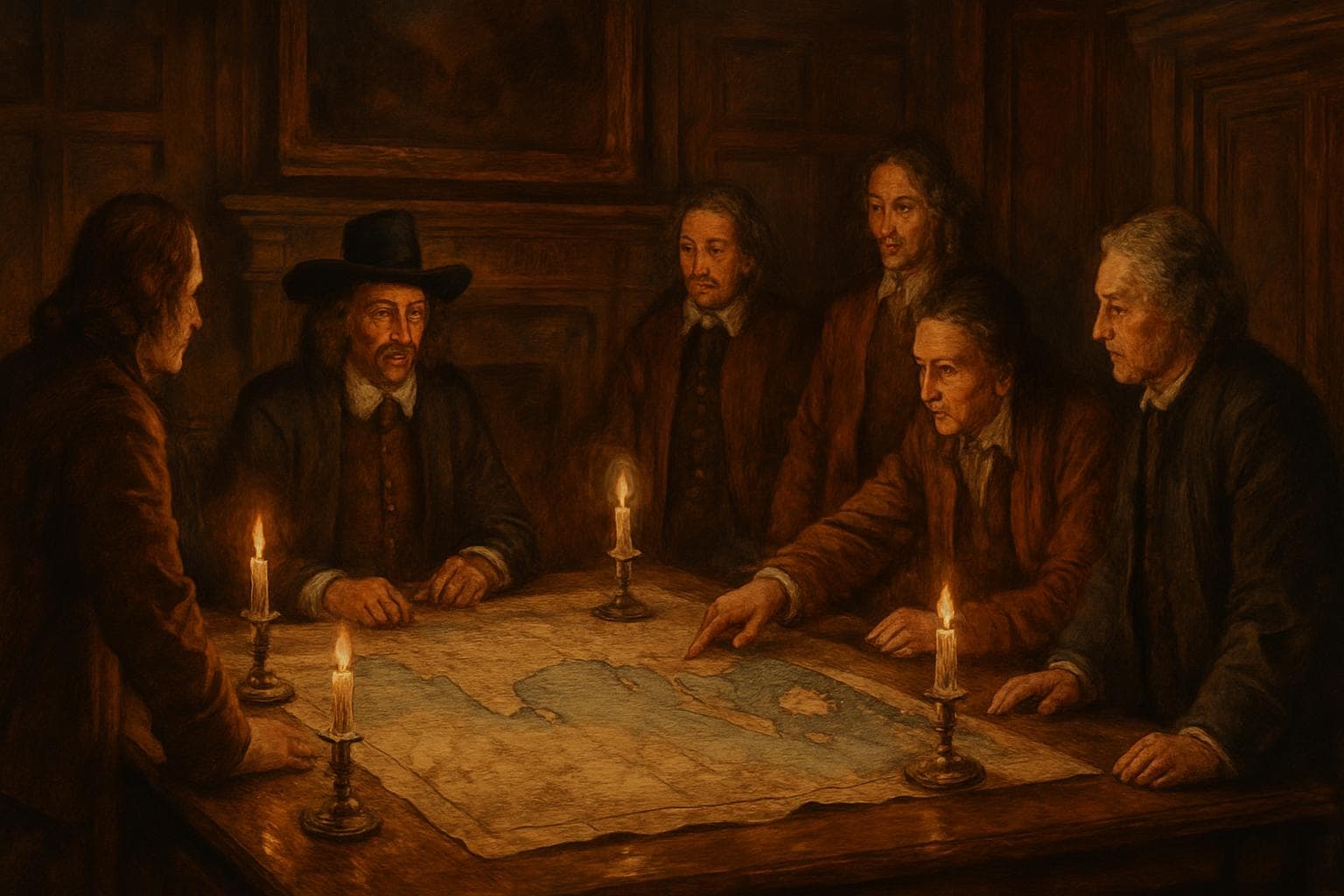
The East India Company: The First Modern Corporation
How a chartered monopoly invented governance, badly
Read chapter

Chapter 17
Adam Smith and the Pin Factory
Specialization as the original 10x
Read chapter

Chapter 18
Babbage and the Cost of Thinking
An early manifesto for measurement
Read chapter

Chapter 19
Taylor's Scientific Management: The Best and Worst Idea of 1911
What he got right, what he got hauntingly wrong
Read chapter
Chapter 20
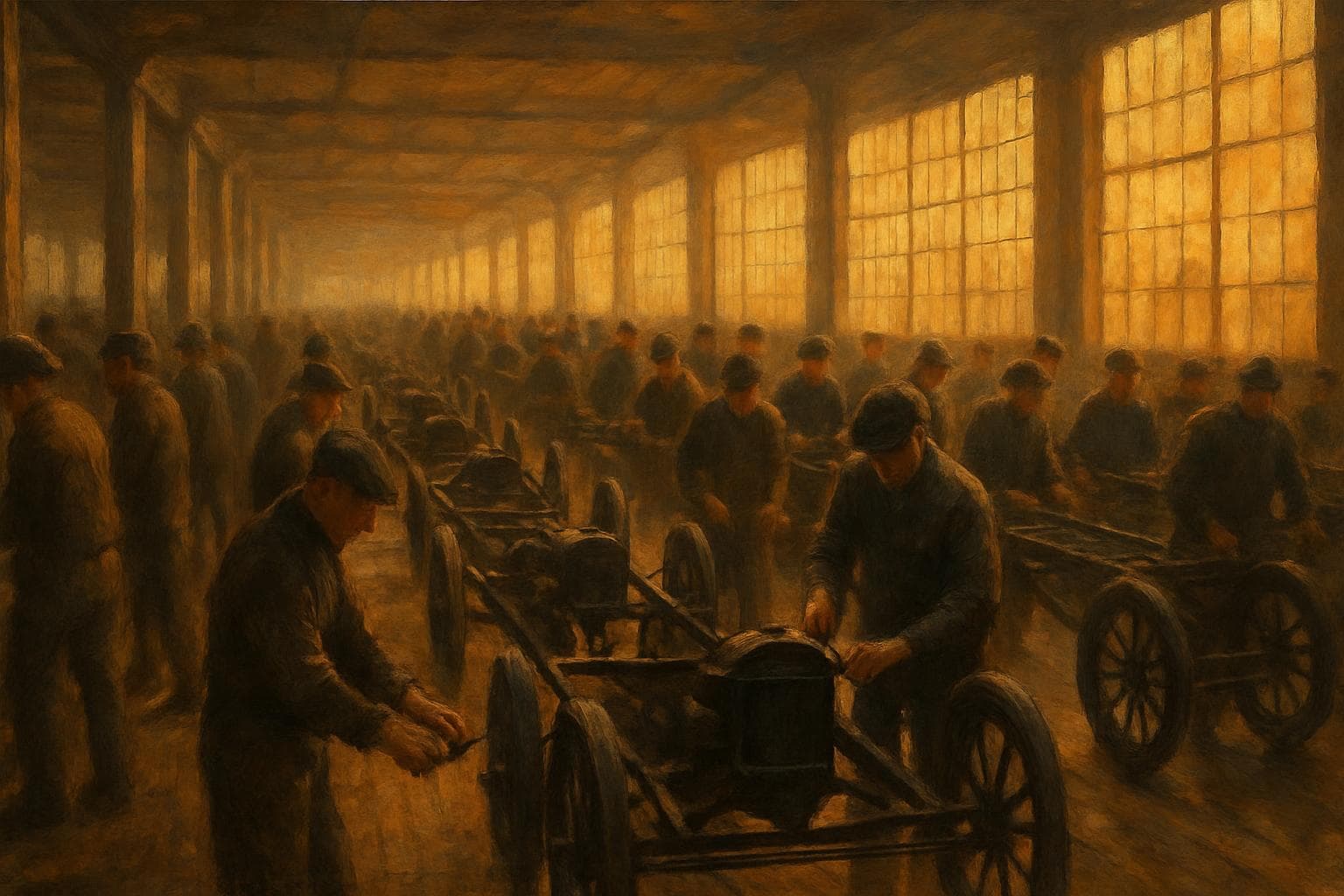
Ford, the Moving Line, and the $5 Day
Mass production and the social contract that made it work
Read chapter

Chapter 21
Mary Parker Follett and the Human Element
The management theorist most managers have never heard of
Read chapter

Chapter 22
Drucker: Management as a Discipline
The man who turned a craft into a profession
Read chapter
Chapter 23
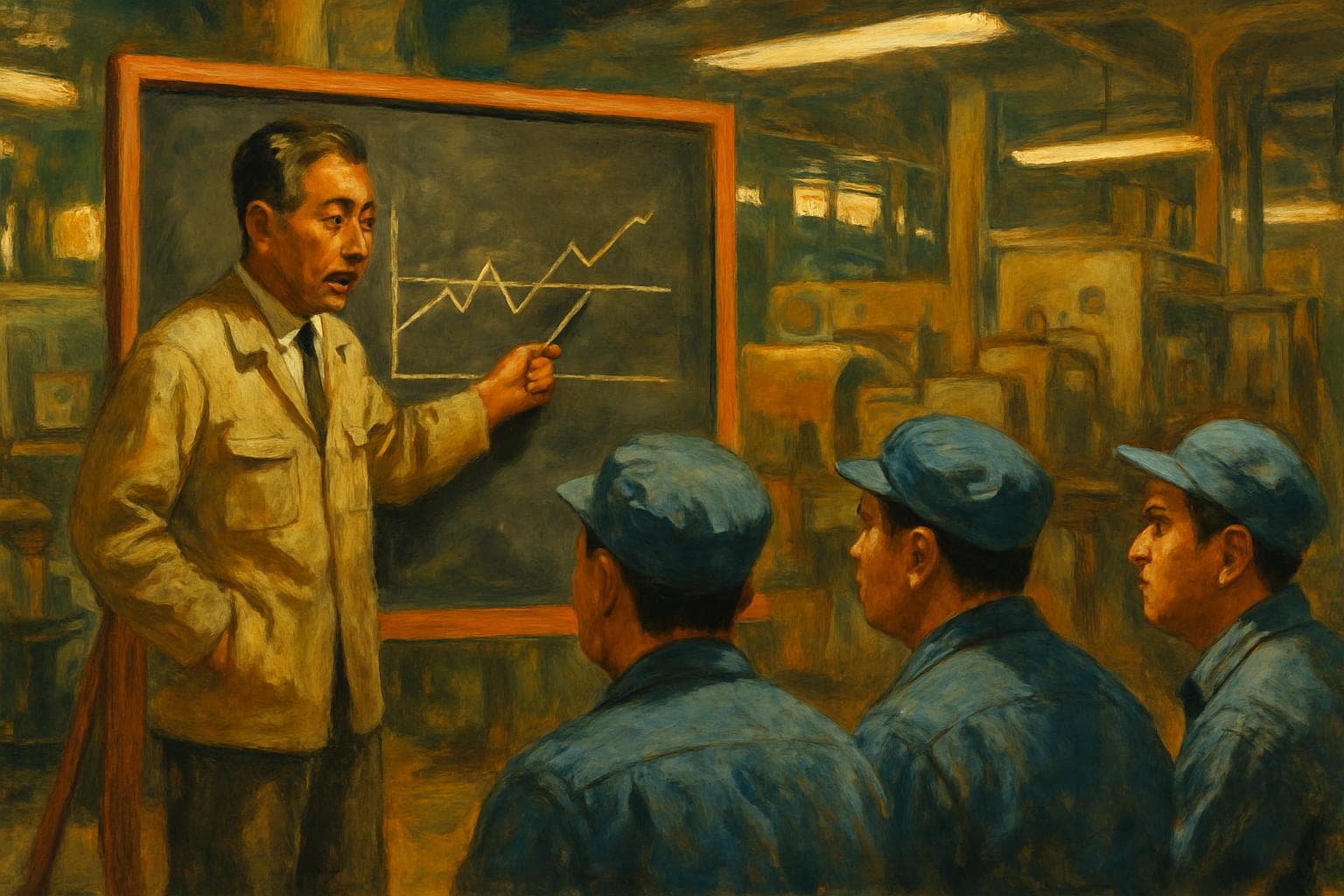
Deming, Toyota, and the Quality Revolution
How Japan rebuilt the world by counting more carefully
Read chapter

Chapter 24
Cultures of Trust: HP, Gore, Semco
What leading by example does that policy can't
Read chapter

Chapter 25
Porter and the Architecture of Strategy
Five forces, value chains, and the misuse of both
Read chapter

Chapter 26
Knowledge Work and Its Discontents
Why we still can't measure it
Read chapter

Chapter 27
Agile and Its Misuse
The 17-page manifesto vs. the 200-page certification
Read chapter

Chapter 28
OKRs and the Goal-Setting Trap
When the metric eats the mission
Read chapter

Chapter 29
Remote, Hybrid, and the Distributed-Work Era
What changed, what didn't, and what we still don't know
Read chapter

Chapter 30
Psychological Safety: What It Is and Isn't
Edmondson, Project Aristotle, and the missing nuance
Read chapter