
I — Foundations · Chapter 2
Why Coordinating Other People Is Hard
The unavoidable physics of human work
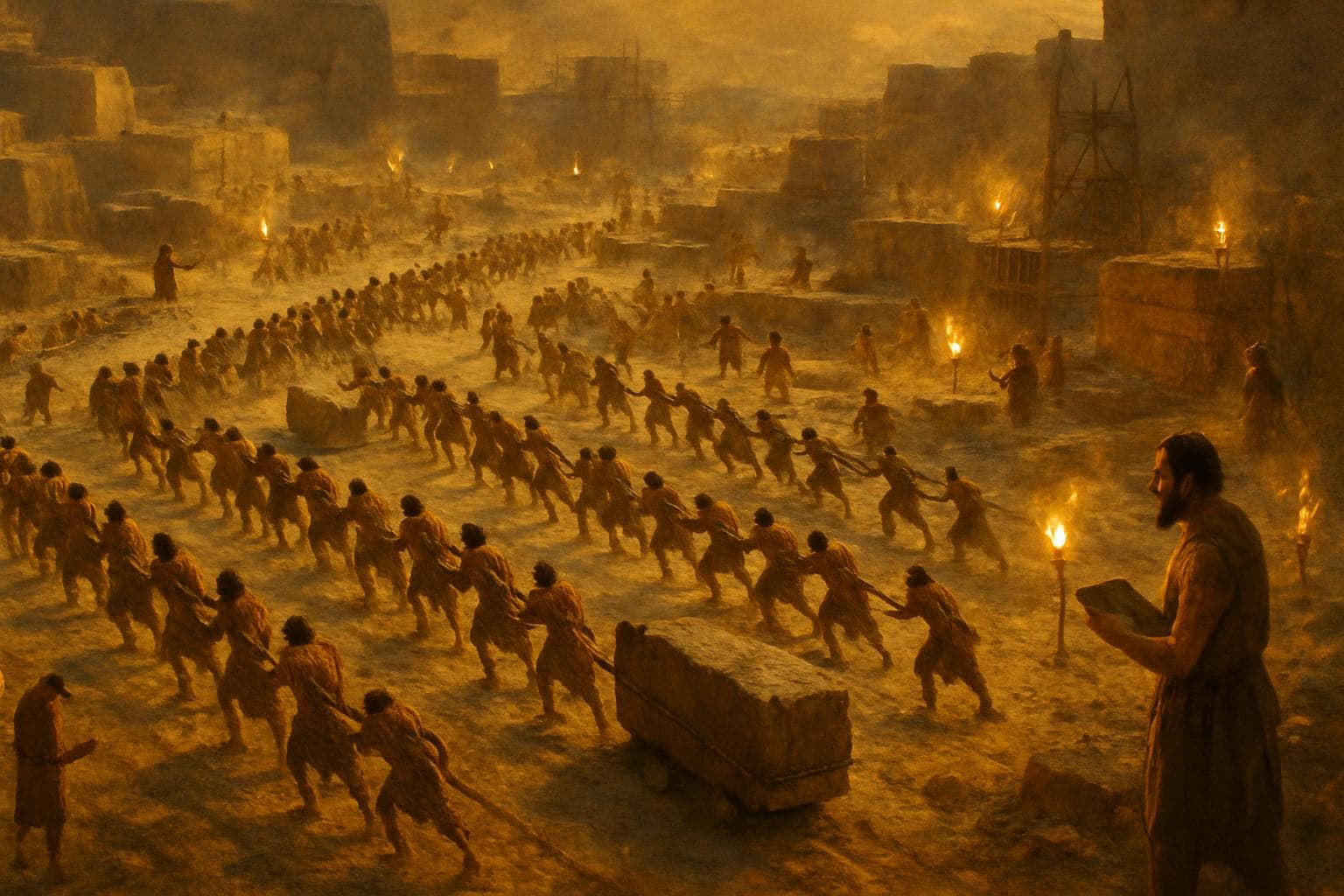
If management were merely a matter of telling competent people what to do, it would not be a discipline; it would be a clerical task. The reason it remains hard, across every era and every industry, is that the act of coordinating other people runs into three unavoidable frictions. Information is local — the person doing the work always knows things the manager does not. Decisions are central — outcomes have to be chosen by someone, even if the choosing is delegated. And incentives drift — the moment two people share a goal, the goal starts to mean slightly different things to each of them. These three frictions explain almost every management framework ever invented.
Friction One: Bandwidth
There is a hard ceiling on how much information any one human can hold about other humans. Anthropologist Robin Dunbar's well-known estimate puts the natural limit of stable social relationships in the rough neighborhood of 150. Inside organizations, the equivalent ceiling shows up as span of control — how many direct reports a single manager can effectively oversee.
The Roman legion answered this question with brutal clarity. A centurion commanded roughly eighty soldiers (a centuria, despite the name), grouped from smaller units of ten (contubernia) under decurions. Above the centurion sat the cohort and the legate; below, the optio and tesserarius. Every span ratio was kept small — single digits to a few dozen. The structure was not invented by an organizational theorist. It was the empirical answer to: how many people can one person actually keep track of in a fight?
Modern research on engineering teams suggests roughly the same ceilings — Mark Horstman's 'Manager Tools' research and Google's Project Oxygen both place the effective span around five to nine direct reports for high-judgment work. The technology has changed; the human bandwidth has not.
Friction Two: Latency
Even when the information exists, getting it from where it sits to where the decision will be made takes time. Latency is what turns a one-day problem into a one-quarter problem.
The pyramid builders of Egypt's Old Kingdom solved this with physical proximity. The diary of Merer, a 4th-Dynasty inspector found at Wadi al-Jarf in 2013, records day-by-day shipments of limestone and the names of the work gangs receiving them. Decisions could be made because the foreman, the gang leader, the scribe, and the load were all in the same place at the same time. There was no latency to speak of — the cost of asking was the cost of walking thirty feet.
Fred Brooks reckoned with the modern version of this problem in The Mythical Man-Month (1975). His observation, now Brooks's Law, is that adding programmers to a late software project makes it later — because every new person increases the communication graph quadratically (n choose 2 new pairs), and the latency of getting them up to speed dominates the throughput they add. The pyramid solution — physical co-location, single shared artifact — is still in use, dressed up as the modern engineering 'team room' or the agile 'war room'. The latency tax is older than the steam engine.
Friction Three: Divergence
Two people can start the day with the same goal and end the day with different goals, neither having lied. This is divergence — the slow drift of intent under the pressure of local incentives, fatigue, and incomplete information.
Friedrich Hayek's 1945 essay 'The Use of Knowledge in Society' is the foundational text. Hayek's argument was about prices in an economy, not about teams in a company, but the mechanism is identical: knowledge is fundamentally distributed; the man on the spot knows things no central planner can know; and when his incentives diverge from the planner's, the system loses fidelity. The price system, Hayek argued, is the marvel that solves this in markets. Inside organizations, the equivalent is harder, because we have not yet invented a price-of-everything signal that travels as fast as a market price.
What managers do every day, mostly unconsciously, is fight divergence — by repeating the goal, by re-explaining context, by changing incentives, by removing people whose interests are too divergent to align. The exhausting nature of management is not the meetings. It is that you are spending all day pushing rope against a force that keeps trying to fray it.
Why the Same Solutions Keep Reappearing
Once you accept that bandwidth, latency, and divergence are the fundamental forces, the recurring patterns of organizational design make sense. Spans of control are bandwidth-management. Co-location, daily standups, and dashboards are latency-management. Strong cultures, clear charters, and aligned compensation are divergence-management. Every era reinvents some combination — the legion, the monastery, the assembly line, the agile team — but the underlying physics never changes.
This is also why every fad framework eventually collapses back to the basics. Holacracy attempted to remove managers; the bandwidth and divergence problems returned in a more diffuse form, and most adopters quietly walked it back. Open-plan offices attempted to maximize bandwidth; they reduced it instead, by overwhelming attention. The frameworks that endure are the ones that respect the constraints rather than wishing them away.
Management's worst-kept secret is that it does not get easier as you scale up. The frictions get bigger, not smaller. A 2,000-person company is not a 10-person company multiplied by 200; it is a fundamentally different physical system, with different bandwidth, latency, and divergence properties. Most career failures of otherwise excellent managers are failures to notice that the physics changed under them. The next thirty-one chapters are, in a sense, a sustained meditation on this single problem.
Sources
- 1.Span of control · Wikipedia
- 2.Dunbar's number · Wikipedia
- 3.Diary of Merer · Wikipedia
- 4.The Mythical Man-Month · Frederick P. Brooks Jr. · 1975
- 5.The Use of Knowledge in Society · Friedrich Hayek · 1945
- 6.Roman legion organization · Wikipedia