If you ask a project manager what slows them down, they'll usually point at a tool — Jira is too clunky, Notion is too loose, Slack is too noisy. We think that's the wrong diagnosis. The tools usually do their jobs. The gaps between them are where the hours actually disappear.
1. Where the Hours Go
A typical week looks like this: a design comment lives in Figma, the engineering follow-up lives in Linear, the client conversation lives in email, the deadline lives in a Google Doc, and the status update lives in Slack. Every cross-tool stitch is a manual operation done by a human — and there are a lot of them.
2. The Real Diagnosis
Your tools are not the problem. The gaps between your tools are. Every best-in-class SaaS app is optimized to keep you inside it, which means the moment a project crosses a tool boundary — design to engineering, sales to delivery, client to internal — context evaporates and someone has to manually rebuild it.
3. Why a Unified Workspace Wins
This is exactly why we built Kavanah around a single workspace model: tasks, discussions, time tracking, client portals, and project budgets all live in the same graph. Fewer syncs. No source-of-truth arguments at standup. Less context-rebuilding.
4. What Changes
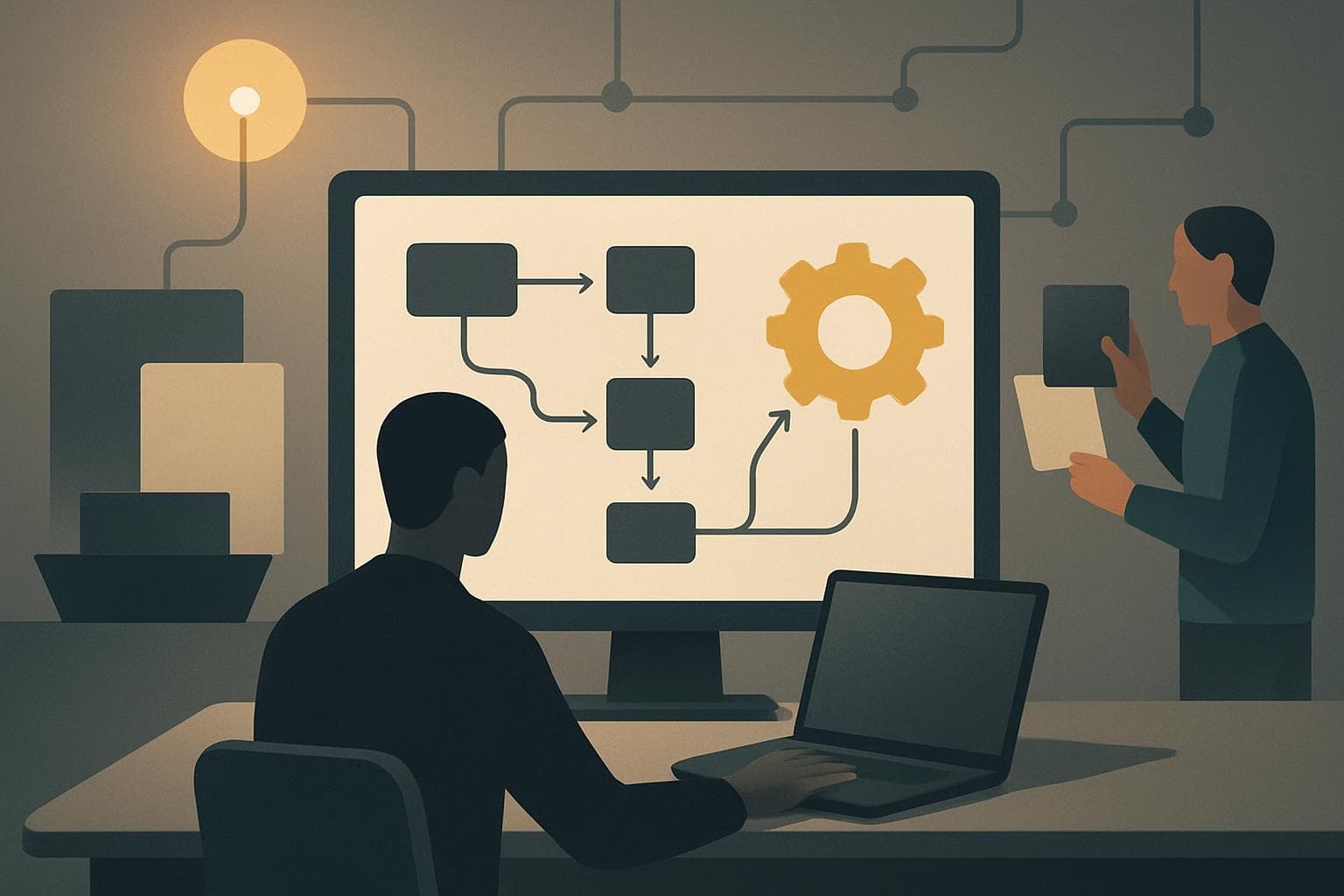
When the work, the conversation about the work, and the timeline of the work all live in the same place, the manual stitching disappears. You don't replace your team — you just stop asking them to play translator between five SaaS apps.
5. Your Move
You can keep paying for five tools that almost talk to each other. Or you can collapse the stack and stop paying the tab-switching tax. The choice, frankly, isn't close.
Tab-switching is a tax on your team. The teams winning right now have already collapsed their stack — and they're not going back.